Shopping for the best AI writing assistant? An AI writing assistant is software that uses machine learning to help you get more done — it keeps getting smarter as the underlying models improve. Pricing, accuracy, and the size of the model behind the tool are the three factors that most affect daily usefulness. Whether you are a beginner or a pro, the right AI writing assistant slots into your workflow and pays for itself fast. Below we compare features, pricing, and real output so you can choose with confidence.
Sensory, Inc.
Sensory, Inc. is an American company which develops software AI technologies for speech, sound and vision. It is based in Santa Clara, California. Sensory’s technologies have shipped in over three billion products from hundreds of leading consumer electronics manufacturers including AT&T, Hasbro, Huawei, Google, Amazon, Samsung, LG, Mattel, Motorola, Plantronics, GoPro, Sony, Tencent, Garmin, LG, Microsoft, Lenovo, and more. Sensory has over 60 issued patents covering speech recognition in consumer electronics, biometric authentication, sensor/speech combinations, wake word technology, and more. == History == Sensory, Inc. was founded in 1994, originally as Sensory Circuits, by Forrest Mozer, Mike Mozer and Todd Mozer. The three had also co-founded ESS Technology years earlier. In 1999 Sensory acquired Fluent Speech Technologies, which was formed and started by a group of professors out of the Oregon Graduate Institute (formerly OGI, now OHSU). Fluent Speech Technologies developed high performance embedded speech engines, the technology from this acquisition is now the core technology used throughout Sensory's chip and software line. === Company timeline === 1994 – Founded 1995 – Introduces the RSC 164 - first commercially successful speech recognition IC 1998 – Introduces first speaker verification IC 2000 – Acquires Oregon based Fluent-Speech Technologies 2002 – Acquires Texas Instruments line of speech output ICs (the SC series) 2007 – Introduces first Voice User Interface for Bluetooth silicon (CSR BC-5) - BlueGenie 2008 - Sensory and BlueAnt partner on the V1 - Revolutionary new Bluetooth headset with a voice user interface. First wearable to use a voice user interface for control and best-reviewed speech recognition product in history 2009 – Introduced world's smallest text to speech system (TTS) and Truly HandsfreeTM Triggers/ wake words. 2010 – Introduced the NLP-5x – First Natural Language Voice Processor and TrulyHandsfree wake words in SDKs for Android, iOS, Linux, and Windows. NLP5x used the first generation of TrulyHandsfree wake words with low power and enhanced accuracy. 2011 – Sensory partners with Google and Microsoft to enable TrulyHandsfree as a front end to Goog411 and Bing411 2012 – Partnered with Tensilica to offer ultra-low power TrulyHandsfree wake words; introduced Speaker Verification and Speaker Identification for mobile phones and other consumer electronics. 2012 - TrulyHandsfree released into Samsung's Galaxy S2 for "Hey Galaxy" wake word 2013 – TrulyHandsfree wake words migrated to many new platforms and began shipping as MotoVoice in the Google-owned MotoX. Sensory's TrulyHandsfree in mobile takes off with the Galaxy S3 and S4 and Galaxy Note and is licensed into wearables like Google Glass. 2014 – Announced new initiative in Vision; added LG and Motorola as customers; received the 2014 Global Mobile Award for Best Mobile Technology Breakthrough at the GSMA Mobile World Congress in Barcelona, Spain (judges commented, "A big advance for the wearables market, this offers many benefits for consumers, increasing uptake and usage of many mobile apps, driving revenue for operators and content providers.") 2015-2018 - Licensed Google, Amazon, MSFT, Baidu, Huawei, ZTE, and many others with TrulyHandsfree wake words. Sensory develops first wake words for OK Google, Hey Siri, and Hey Cortana. 2019 - Sensory launched two new solutions: SoundID, sound identification, and TrulyNatural, embedded large vocabulary speech recognition. Sensory also acquired Vocalize.ai, an independent testing lab. 2020 - Sensory introduced VoiceHub, which allows the automated generation of wake words. 2021 - Sensory expands VoiceHub with speech recognition and NLU capabilities. The company initiated a new cloud platform, SensoryCloud.ai. 2022-Sensory rolls out SensoryCloud.ai with speech to text, text to speech, face & voice biometrics 2024- Sensory Automotive & TrulyNatural Speech-to-text On-Device launched == Technology and products == Sensory originally developed both hardware (Integrated Circuit - IC or "chip") and software platforms but migrated to software only around 2005 and added cloud and hybrid computing capabilities in 2021. Sensory's RSC-164 IC (Integrated Circuit or "chip") was used on NASA's Mars Polar Lander in the Mars Microphone on the Lander. Speech Synthesis SC-6x chips – acquired some speech synthesis technology from Texas Instruments. Sensory’s embedded AI solutions include the following: TrulyHandsfree (THF) - wake word detection and phrase spotting. TrulyNatural (TNL) - large vocabulary continuous speech recognition with NLU. TrulySecure (TS) - face and voice biometrics. TrulySecureSpeakerVerification (TSSV) - speaker and sound identification. VoiceHub - Online portal for creating custom wake words and speech recognition models with NLU. Sensory Automotive- Sensory Automotive is a full voice and vision suite of AI technologies that operate efficiently in the car without connecting to a network. The cloud initiative, SensoryCloud.ai, is targeting Speech To Text (STT), Text To Speech (TTS), Wake Word verification, face and voice recognition, and sound identification.
Spreading activation
Spreading activation is a method for searching associative networks, biological and artificial neural networks, or semantic networks. The search process is initiated by labeling a set of source nodes (e.g. concepts in a semantic network) with weights or "activation" and then iteratively propagating or "spreading" that activation out to other nodes linked to the source nodes. Most often these "weights" are real values that decay as activation propagates through the network. When the weights are discrete this process is often referred to as marker passing. Activation may originate from alternate paths, identified by distinct markers, and terminate when two alternate paths reach the same node. However brain studies show that several different brain areas play an important role in semantic processing. Spreading activation in semantic networks as a model were invented in cognitive psychology to model the fan out effect. Spreading activation can also be applied in information retrieval, by means of a network of nodes representing documents and terms contained in those documents. == Cognitive psychology == As it relates to cognitive psychology, spreading activation is the theory of how the brain iterates through a network of associated ideas to retrieve specific information. The spreading activation theory presents the array of concepts within our memory as cognitive units, each consisting of a node and its associated elements or characteristics, all connected together by edges. A spreading activation network can be represented schematically, in a sort of web diagram with shorter lines between two nodes meaning the ideas are more closely related and will typically be associated more quickly to the original concept. In memory psychology, the spreading activation model holds that people organize their knowledge of the world based on their personal experiences, which in turn form the network of ideas that is the person's knowledge of the world. When a word (the target) is preceded by an associated word (the prime) in word recognition tasks, participants seem to perform better in the amount of time that it takes them to respond. For instance, subjects respond faster to the word "doctor" when it is preceded by "nurse" than when it is preceded by an unrelated word like "carrot". This semantic priming effect with words that are close in meaning within the cognitive network has been seen in a wide range of tasks given by experimenters, ranging from sentence verification to lexical decision and naming. As another example, if the original concept is "red" and the concept "vehicles" is primed, they are much more likely to say "fire engine" instead of something unrelated to vehicles, such as "cherries". If instead "fruits" was primed, they would likely name "cherries" and continue on from there. The activation of pathways in the network has everything to do with how closely linked two concepts are by meaning, as well as how a subject is primed. == Algorithm == A directed graph is populated by Nodes[ 1...N ] each having an associated activation value A [ i ] which is a real number in the range [0.0 ... 1.0]. A Link[ i, j ] connects source node[ i ] with target node[ j ]. Each edge has an associated weight W [ i, j ] usually a real number in the range [0.0 ... 1.0]. Parameters: Firing threshold F, a real number in the range [0.0 ... 1.0] Decay factor D, a real number in the range [0.0 ... 1.0] Steps: Initialize the graph setting all activation values A [ i ] to zero. Set one or more origin nodes to an initial activation value greater than the firing threshold F. A typical initial value is 1.0. For each unfired node [ i ] in the graph having an activation value A [ i ] greater than the node firing threshold F: For each Link [ i, j ] connecting the source node [ i ] with target node [ j ], adjust A [ j ] = A [ j ] + (A [ i ] W [ i, j ] D) where D is the decay factor. If a target node receives an adjustment to its activation value so that it would exceed 1.0, then set its new activation value to 1.0. Likewise maintain 0.0 as a lower bound on the target node's activation value should it receive an adjustment to below 0.0. Once a node has fired it may not fire again, although variations of the basic algorithm permit repeated firings and loops through the graph. Nodes receiving a new activation value that exceeds the firing threshold F are marked for firing on the next spreading activation cycle. If activation originates from more than one node, a variation of the algorithm permits marker passing to distinguish the paths by which activation is spread over the graph The procedure terminates when either there are no more nodes to fire or in the case of marker passing from multiple origins, when a node is reached from more than one path. Variations of the algorithm that permit repeated node firings and activation loops in the graph, terminate after a steady activation state, with respect to some delta, is reached, or when a maximum number of iterations is exceeded. == Examples ==
Brain technology
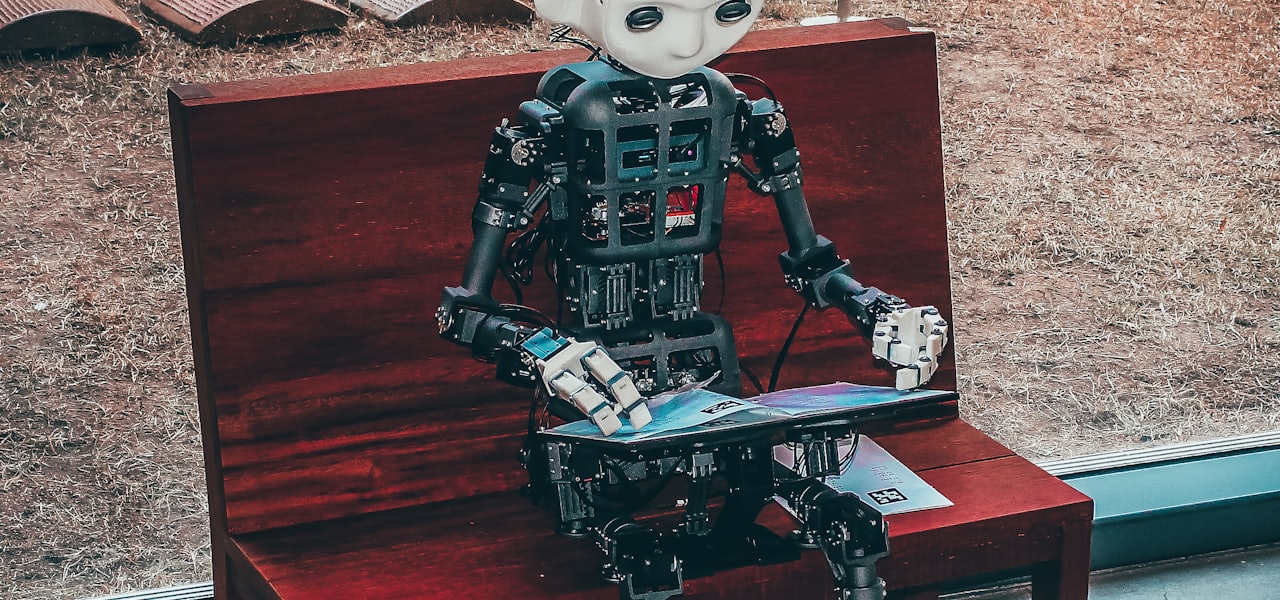
Brain technology, or self-learning know-how systems, defines a technology that employs latest findings in neuroscience. [see also neuro implants] The term was first introduced by the Artificial Intelligence Laboratory in Zurich, Switzerland, in the context of the Roboy project. Brain Technology can be employed in robots, know-how management systems and any other application with self-learning capabilities. In particular, Brain Technology applications allow the visualization of the underlying learning architecture often coined as "know-how maps". == Research and applications == The first demonstrations of BC in humans and animals took place in the 1960s when Grey Walter demonstrated use of non-invasively recorded encephalogram (EEG) signals from a human subject to control a slide projector (Graimann et al., 2010). Soon after Jacques J. Vidal coined the term brain–computer interface (BCI) in 1971, the Defense Advanced Research Projects Agency (DARPA) first starting funding brain–computer interface research and has since funded several brain–computer interface projects. That market is expected to reach a value of $1.72 billion by 2022. Brain–computer interfaces record brain activity, transmit the information out of the body, signal-process the data via algorithms, and convert them into command control signals. In 2012, a landmark study in Nature, led by pioneer Leigh Hochberg, MD, PhD, demonstrated that two people with tetraplegia were able to control robotic arms through thought when connected to the BrainGate neural interface system. The two participants were able to reach for and grasp objects in three-dimensional space, and one participant used the system to serve herself coffee for the first time since becoming paralyzed nearly 15 years prior. And in October 2020, two patients were able to wirelessly control an operating system to text, email, shop and bank using direct thought through the Stentrode brain computer interface (Journal of NeuroInterventional Surgery) in a study led by Thomas Oxley. This was the first time a brain–computer interface was implanted via the patient's blood vessels, eliminating the need for open brain surgery. Currently a number of groups are exploring a range of experimental devices using brain–computer interfaces, which have the potential to fundamentally change the way of life for patients with paralysis and a wide range of neurological disorders. These include: as Elon Musk, Facebook, and the University of California in San Francisco. The systems. This technology is also being explored as a neuromodulation device and may ultimately help diagnose and treat a range of brain pathologies, such as epilepsy and Parkinson's disease.
Emergent algorithm
An emergent algorithm is an algorithm that exhibits emergent behavior. In essence an emergent algorithm implements a set of simple building block behaviors that when combined exhibit more complex behaviors. One example of this is the implementation of fuzzy motion controllers used to adapt robot movement in response to environmental obstacles. An emergent algorithm has the following characteristics: it achieves predictable global effects it does not require global visibility it does not assume any kind of centralized control it is self-stabilizing Other examples of emergent algorithms and models include cellular automata, artificial neural networks and swarm intelligence systems (ant colony optimization, bees algorithm, etc.).
Hekaton (database)
Hekaton (also known as SQL Server In-Memory OLTP) is an in-memory database for OLTP workloads built into Microsoft SQL Server. Hekaton was designed in collaboration with Microsoft Research and was released in SQL Server 2014. Traditional RDBMS systems were designed when memory resources were expensive, and were optimized for disk storage. Hekaton is instead optimized for a working set stored entirely in main memory, but is still accessible via T-SQL like normal tables. It is fundamentally different from the "DBCC PINTABLE" feature in earlier SQL Server versions. Hekaton was announced at the Professional Association for SQL Server (PASS) conference 2012.
Energy-based model
An energy-based model (EBM), also called Canonical Ensemble Learning (CEL) or Learning via Canonical Ensemble (LCE), is an application of canonical ensemble formulation from statistical physics for learning from data. The approach prominently appears in generative artificial intelligence. EBMs provide a unified framework for many probabilistic and non-probabilistic approaches to such learning, particularly for training graphical and other structured models. An EBM learns the characteristics of a target dataset and generates a similar but larger dataset. EBMs detect the latent variables of a dataset and generate new datasets with a similar distribution. Energy-based generative neural networks is a class of generative models, which aim to learn explicit probability distributions of data in the form of energy-based models, the energy functions of which are parameterized by modern deep neural networks. Boltzmann machines are a special form of energy-based models with a specific parametrization of the energy. == Description == For a given input x {\displaystyle x} , the model describes an energy E θ ( x ) {\displaystyle E_{\theta }(x)} such that the Boltzmann distribution P θ ( x ) = e − β E θ ( x ) Z ( θ ) {\displaystyle P_{\theta }(x)={e^{-\beta E_{\theta }(x)} \over Z(\theta )}} is a probability (density), and typically β = 1 {\displaystyle \beta =1} . Since the normalization constant: Z ( θ ) := ∫ x ∈ X e − β E θ ( x ) d x {\displaystyle Z(\theta ):=\int _{x\in X}e^{-\beta E_{\theta }(x)}dx} (also known as the partition function) depends on all the Boltzmann factors of all possible inputs x {\displaystyle x} , it cannot be easily computed or reliably estimated during training simply using standard maximum likelihood estimation. However, for maximizing the likelihood during training, the gradient of the log-likelihood of a single training example x {\displaystyle x} is given by using the chain rule: ∂ θ log ( P θ ( x ) ) = E x ′ ∼ P θ [ ∂ θ E θ ( x ′ ) ] − ∂ θ E θ ( x ) ( ∗ ) {\displaystyle \partial _{\theta }\log \left(P_{\theta }(x)\right)=\mathbb {E} _{x'\sim P_{\theta }}[\partial _{\theta }E_{\theta }(x')]-\partial _{\theta }E_{\theta }(x)\,()} The expectation in the above formula for the gradient can be approximately estimated by drawing samples x ′ {\displaystyle x'} from the distribution P θ {\displaystyle P_{\theta }} using Markov chain Monte Carlo (MCMC). Early energy-based models, such as the 2003 Boltzmann machine by Hinton, estimated this expectation via blocked Gibbs sampling. Newer approaches make use of more efficient Stochastic Gradient Langevin Dynamics (LD), drawing samples using: x 0 ′ ∼ P 0 , x i + 1 ′ = x i ′ − α 2 ∂ E θ ( x i ′ ) ∂ x i ′ + ϵ {\displaystyle x_{0}'\sim P_{0},x_{i+1}'=x_{i}'-{\frac {\alpha }{2}}{\frac {\partial E_{\theta }(x_{i}')}{\partial x_{i}'}}+\epsilon } , where ϵ ∼ N ( 0 , α ) {\displaystyle \epsilon \sim {\mathcal {N}}(0,\alpha )} . A replay buffer of past values x i ′ {\displaystyle x_{i}'} is used with LD to initialize the optimization module. The parameters θ {\displaystyle \theta } of the neural network are therefore trained in a generative manner via MCMC-based maximum likelihood estimation: the learning process follows an "analysis by synthesis" scheme, where within each learning iteration, the algorithm samples the synthesized examples from the current model by a gradient-based MCMC method (e.g., Langevin dynamics or Hybrid Monte Carlo), and then updates the parameters θ {\displaystyle \theta } based on the difference between the training examples and the synthesized ones – see equation ( ∗ ) {\displaystyle ()} . This process can be interpreted as an alternating mode seeking and mode shifting process, and also has an adversarial interpretation. Essentially, the model learns a function E θ {\displaystyle E_{\theta }} that associates low energies to correct values, and higher energies to incorrect values. After training, given a converged energy model E θ {\displaystyle E_{\theta }} , the Metropolis–Hastings algorithm can be used to draw new samples. The acceptance probability is given by: P a c c ( x i → x ∗ ) = min ( 1 , P θ ( x ∗ ) P θ ( x i ) ) . {\displaystyle P_{acc}(x_{i}\to x^{})=\min \left(1,{\frac {P_{\theta }(x^{})}{P_{\theta }(x_{i})}}\right).} == History == The term "energy-based models" was first coined in a 2003 JMLR paper where the authors defined a generalisation of independent components analysis to the overcomplete setting using EBMs. Other early work on EBMs proposed models that represented energy as a composition of latent and observable variables. == Characteristics == EBMs demonstrate useful properties: Simplicity and stability. The EBM is the only object that needs to be designed and trained. Separate networks need not be trained to ensure balance. Adaptive computation time. An EBM can generate sharp, diverse samples or (more quickly) coarse, less diverse samples. Given infinite time, this procedure produces true samples. Flexibility. In Variational Autoencoders (VAE) and flow-based models, the generator learns a map from a continuous space to a (possibly) discontinuous space containing different data modes. EBMs can learn to assign low energies to disjoint regions (multiple modes). Adaptive generation. EBM generators are implicitly defined by the probability distribution, and automatically adapt as the distribution changes (without training), allowing EBMs to address domains where generator training is impractical, as well as minimizing mode collapse and avoiding spurious modes from out-of-distribution samples. Compositionality. Individual models are unnormalized probability distributions, allowing models to be combined through product of experts or other hierarchical techniques. == Experimental results == On image datasets such as CIFAR-10 and ImageNet 32x32, an EBM model generated high-quality images relatively quickly. It supported combining features learned from one type of image for generating other types of images. It was able to generalize using out-of-distribution datasets, outperforming flow-based and autoregressive models. EBM was relatively resistant to adversarial perturbations, behaving better than models explicitly trained against them with training for classification. == Applications == Target applications include natural language processing, robotics and computer vision. The first energy-based generative neural network is the generative ConvNet proposed in 2016 for image patterns, where the neural network is a convolutional neural network. The model has been generalized to various domains to learn distributions of videos, and 3D voxels. They are made more effective in their variants. They have proven useful for data generation (e.g., image synthesis, video synthesis, 3D shape synthesis, etc.), data recovery (e.g., recovering videos with missing pixels or image frames, 3D super-resolution, etc), data reconstruction (e.g., image reconstruction and linear interpolation ). == Alternatives == EBMs compete with techniques such as variational autoencoders (VAEs), generative adversarial networks (GANs) or normalizing flows. == Extensions == === Joint energy-based models === Joint energy-based models (JEM), proposed in 2020 by Grathwohl et al., allow any classifier with softmax output to be interpreted as energy-based model. The key observation is that such a classifier is trained to predict the conditional probability p θ ( y | x ) = e f → θ ( x ) [ y ] ∑ j = 1 K e f → θ ( x ) [ j ] for y = 1 , … , K and f → θ = ( f 1 , … , f K ) ∈ R K , {\displaystyle p_{\theta }(y|x)={\frac {e^{{\vec {f}}_{\theta }(x)[y]}}{\sum _{j=1}^{K}e^{{\vec {f}}_{\theta }(x)[j]}}}\ \ {\text{ for }}y=1,\dotsc ,K{\text{ and }}{\vec {f}}_{\theta }=(f_{1},\dotsc ,f_{K})\in \mathbb {R} ^{K},} where f → θ ( x ) [ y ] {\displaystyle {\vec {f}}_{\theta }(x)[y]} is the y-th index of the logits f → {\displaystyle {\vec {f}}} corresponding to class y. Without any change to the logits it was proposed to reinterpret the logits to describe a joint probability density: p θ ( y , x ) = e f → θ ( x ) [ y ] Z ( θ ) , {\displaystyle p_{\theta }(y,x)={\frac {e^{{\vec {f}}_{\theta }(x)[y]}}{Z(\theta )}},} with unknown partition function Z ( θ ) {\displaystyle Z(\theta )} and energy E θ ( x , y ) = − f θ ( x ) [ y ] {\displaystyle E_{\theta }(x,y)=-f_{\theta }(x)[y]} . By marginalization, we obtain the unnormalized density p θ ( x ) = ∑ y p θ ( y , x ) = ∑ y e f → θ ( x ) [ y ] Z ( θ ) =: e − E θ ( x ) , {\displaystyle p_{\theta }(x)=\sum _{y}p_{\theta }(y,x)=\sum _{y}{\frac {e^{{\vec {f}}_{\theta }(x)[y]}}{Z(\theta )}}=:e^{-E_{\theta }(x)},} therefore, E θ ( x ) = − log ( ∑ y e f → θ ( x ) [ y ] Z ( θ ) ) , {\displaystyle E_{\theta }(x)=-\log \left(\sum _{y}{\frac {e^{{\vec {f}}_{\theta }(x)[y]}}{Z(\theta )}}\right),} so that any classifier can be used to define an energy function E θ ( x ) {\displaystyle E_{\theta }(x)} .